How to
How to choose which competitors are worth watching
Why five to ten is the right number, the three tests a shop has to pass to earn a place, and the four kinds of shop people waste months watching.
Published 6 min read

Five to ten, chosen because your customer would genuinely buy from them instead of you — not because they are the biggest names in your category. A list of five you check every month is worth more than a list of thirty you abandon in week three. Here are the three tests a shop should pass before it earns a place, the two shops worth adding on purpose, and the four kinds that waste people's time.
Why the number matters more than the namesLink to this section
Competitor research fails far more often from abandonment than from watching the wrong shop. A long list feels thorough on the day you write it and becomes a chore by the third week, at which point it stops being done at all.
Five shops, checked properly every month, produces a real picture of your market within a quarter. Thirty shops checked once produces a document nobody opens again.
If you are unsure, start with three. You can always add.
The three testsLink to this section
A shop earns a place on your list only if it passes all three.
1. Would your customer genuinely consider them?Link to this section
Not "do they sell similar things" — would the specific person who buys from you put this shop in the same mental basket? A shop selling the same product to a different kind of person is not competing with you for that purchase.
2. Are they in your price band?Link to this section
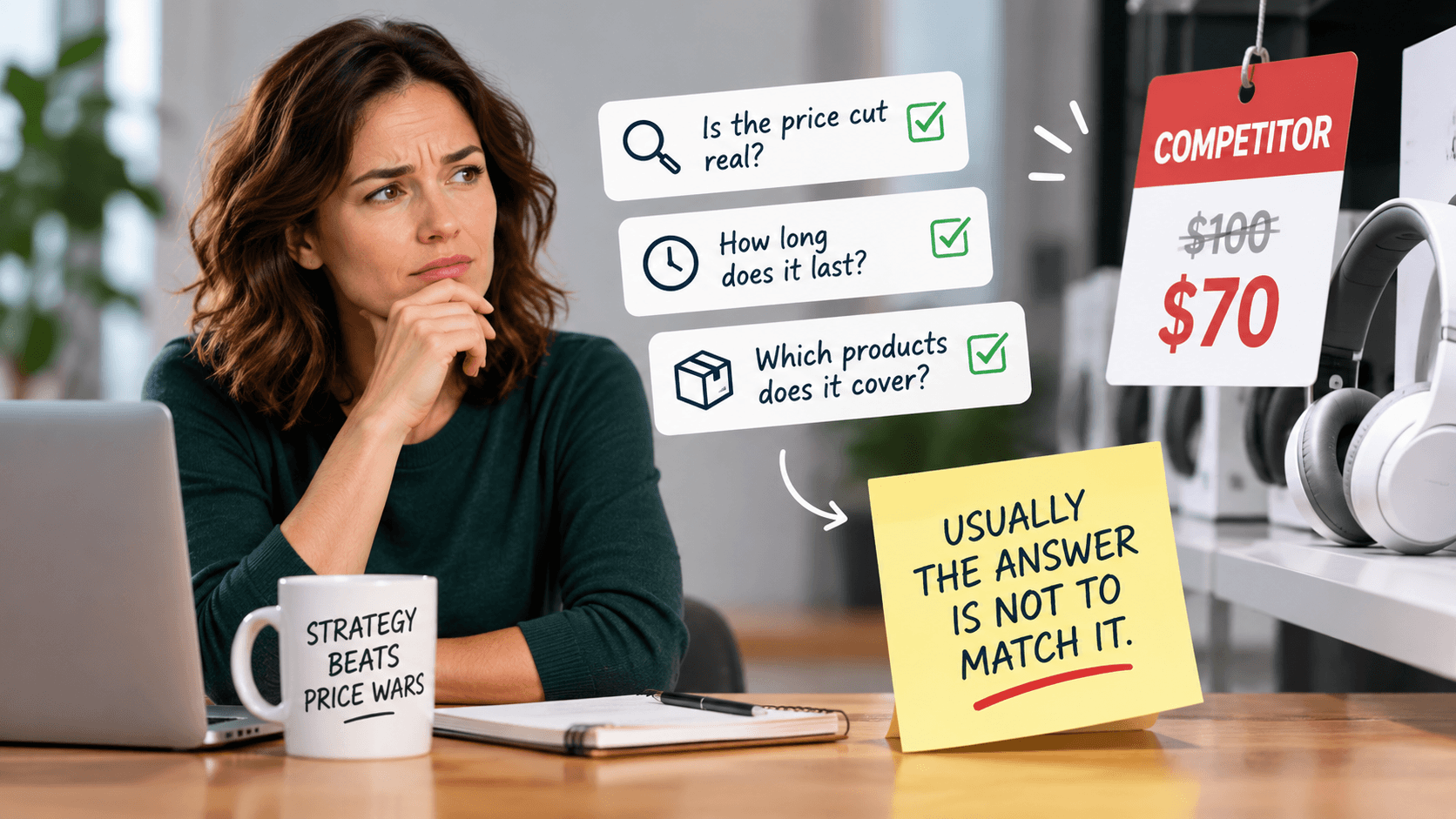
Roughly half to double your average price. Outside that range you are not competing for the same decision. A shop selling at five times your price is answering a different question for a different buyer, and copying anything they do is likely to cost you money.
3. Do they appear where your customers actually look?Link to this section
Search for what you sell, the way a customer would phrase it, and note which shops appear. Do the same on whichever social platform your customers actually use. A shop you know about because you follow the industry, but which never appears where buyers are looking, is a peer rather than a competitor.
Two shops worth adding deliberatelyLink to this section
One shop clearly ahead of you. Not the category giant — the one roughly eighteen months further along. This is usually the most useful shop on your list, because what they are doing now is plausibly what you will be doing next year, and their problems are the ones heading towards you.
One newcomer. New shops move quickly and try things established ones will not risk. They show you what is changing in your market before the change is obvious.
Neither has to pass test two as strictly. They are there to teach you something rather than to be compared against.
The four kinds of shop that waste your timeLink to this section
The giant. They have budgets, teams and supplier terms you do not. Watching them tells you what is possible with resources you will not have this year. It is interesting and it is not actionable.
The marketplace listing. A seller on a large marketplace competes on that marketplace's terms, not on the terms of a direct shop. Different economics, different customer, different levers.
The shop you have a grudge against. Everybody has one. The attention it gets is out of proportion to its effect on your business, and every hour spent on it is an hour not spent on the shop that is actually taking your customers.
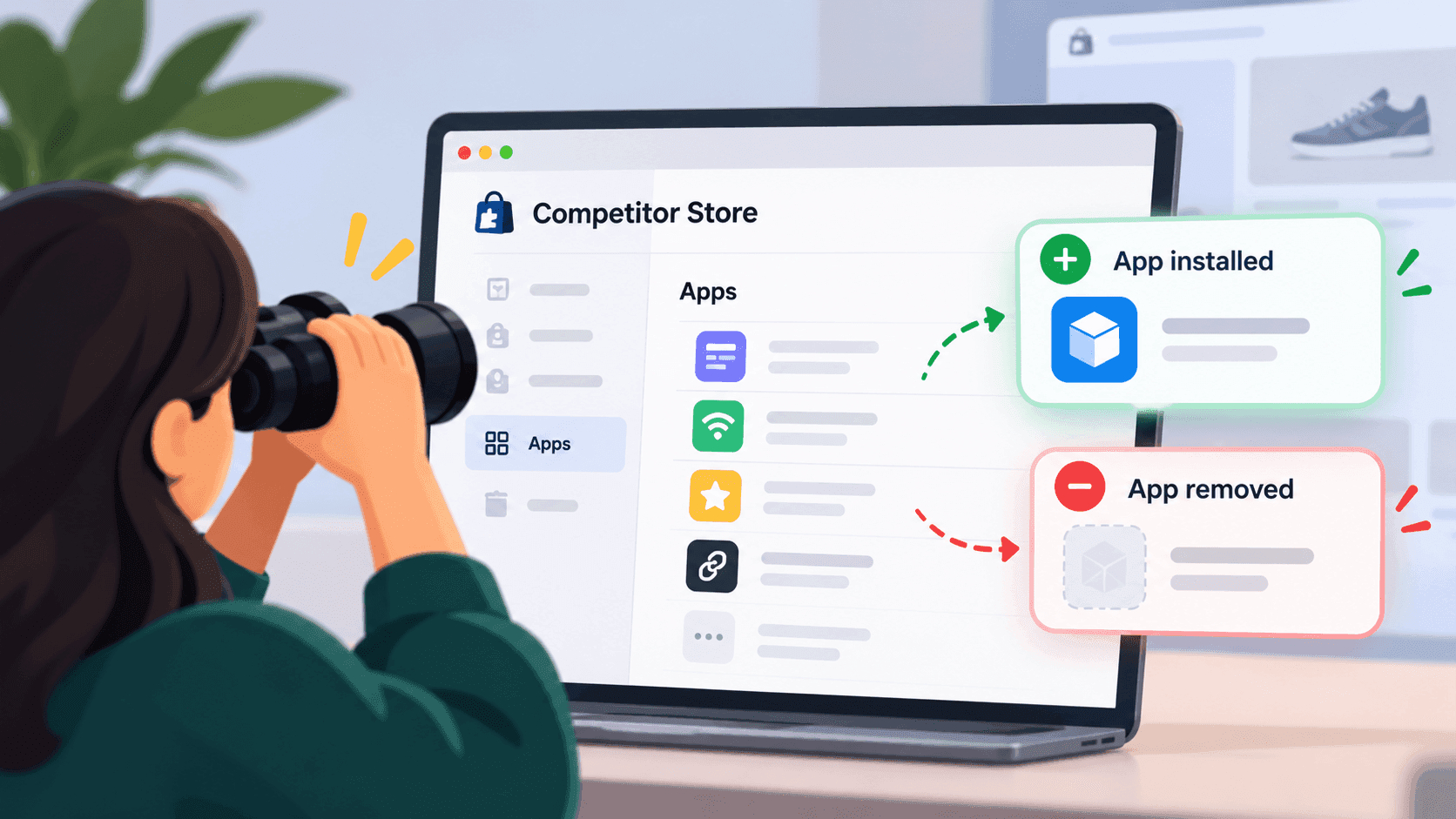
The shop that no longer exists. Lists go stale quietly. A shop can close, be sold, move off the platform or pivot into something else, and nothing tells you. When we tested store lookups against a public directory of shop addresses in September 2026, a noticeable share of the addresses were no longer running the kind of shop they were listed as — one had become an entirely different business. Re-check your list every quarter.
How often to lookLink to this section
| How often | What | Who it is for |
|---|---|---|
| Weekly | New products and obvious sales, top three shops only | Everyone |
| Monthly | The full picture for every shop on the list | Everyone |
| Quarterly | Is this still the right list? Add, remove, re-rank | Everyone |
The quarterly review is the one people skip and the one that keeps the exercise honest. Markets move; the list that was right in January is rarely right in October.
What to record about each oneLink to this section
Keep it to the handful of things that are actually true and checkable — what a shop publishes and what it does not sets out which is which. In practice: what they sell, how many, at what prices, what is discounted, what is new, and what they visibly run to convert. Six columns, not thirty.
And record dates. A note without a date is a memory.
A note on how many you can practically trackLink to this section
There is a natural ceiling on how many shops one person can follow by hand, and in our experience it is lower than people expect — somewhere around three if you are doing it weekly and properly. That is the real reason tools exist for this: not because the checking is difficult, but because doing it repeatedly, on time, for more than a couple of shops is more attention than a working day has.
StoreLenz is being built around exactly that: you name the shops and it does the looking on a schedule. How many shops each plan covers is on the pricing page, and the numbers there are deliberately in the same range as the advice above — because watching fifty shops you have not thought about carefully is no better than watching thirty by hand.
What this exercise cannot do for youLink to this section
Three honest limits, because choosing a list is judgement rather than measurement.
No tool can tell you who your competitors are. Software can tell you which shops sell similar products, or which sites a shop's visitors also visit. It cannot know which shops your particular customer weighs against you, because that lives in their head. Any "competitors" list a tool hands you is a starting suggestion, not an answer.
Watching a shop tells you what they do, never why. You will see a competitor drop prices and you will not know whether it is a clearance, a land grab, a cash-flow problem or a test. Resist the urge to write the reason down as though you knew it.
The most dangerous competitor is usually the one not on your list. New entrants, a marketplace changing its terms, a supplier going direct, a shift in how people search for what you sell — none of these appear on a list of named shops. That is what the quarterly review is for: not just checking the shops, but asking whether the list is still pointed at the right kind of threat.
Related readingLink to this section
- Shopify competitor analysis: a practical guide
- What you can and cannot learn about a store from outside
- How to see what a competitor has just launched
SourcesLink to this section
- Our own testing of store lookups against a public directory of shop addresses, September 2026, where a number of listed addresses were no longer running the kind of shop they were listed as
- No external sources: this article contains no external fact and no statistic. It is method and judgement
Written by Pinto Arkad
I love shopify